Owner-Operator P&L, no illusions: income, capex, fuel, repairs, taxes
The idea of becoming an owner-operator is often seen as a milestone in a driver’s life as it is the time he or she is said to be making “real money.” However, it is actually the time when the driver transforms the driving into a trucking business, a business with liability at every decision that is made. Just having income does not necessarily mean that you are doing well. Profit and loss depend on expenses, for example, how fuel, repairs, capital expenditures, and taxes are accounted for. This is where illusions fade away and the authentic owner-operator P&L starts.
A P&L statement for an independent trucker is a must. Only with it can one tell if the miles driven are translated into money one can sustain over time or are they only a cover for the ongoing expenses.
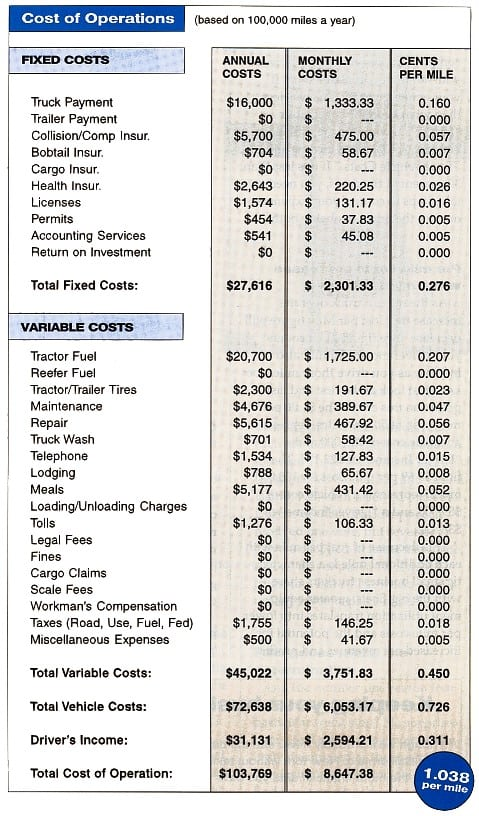
Typical Owner-Operator P&L Breakdown (Per Mile Perspective)
| P&L Component | What It Covers in Reality | Why It Matters |
| Revenue | Linehaul, accessorials, fuel surcharge | Starting point only, not income |
| Fuel expenses | Diesel, idling, route inefficiency | Largest variable cost, volatile |
| Repairs & maintenance | Tires, brakes, PM, breakdowns | Predictable long-term expense |
| CapEx allocation | Truck depreciation, financing cost | Determines survival horizon |
| Fixed business expenses | Insurance, permits, accounting | Pressure during low-mile weeks |
| Taxes reserve | Federal, state, self-employment | Often underestimated, unavoidable |
| Net operating margin | What remains before owner pay | True indicator of sustainability |
| Owner-operator salary | Planned, consistent withdrawal | Must not drain reserves |
First, many owner-operators make the mistake of mixing gross revenue with owner-operator income, and later on, they find out cash flow and profitability are not the same.
A well-structured trucking P&L is the only tool that shows whether revenue supports the business or merely keeps it running.
The main theme here is an explanation of the trucking industry P&L that goes straight to the point: the income structure, CapEx reality, truck fuel cost, trucking repairs, maintenance exposure, and owner-operator taxes. This is intended not to be just motivation but rather clarity.
Revenue Is Not Income: The First Owner-Operator Illusion
The first thing that catches the eye in a profit and loss statement is the revenue figure. Linehaul, accessorials, fuel surcharge — these numbers look terrific, especially next to a company driver paycheck. Revenue is the entry point, not the exit.
Owner-operator income is what the trucker accumulates after the company expenses are deducted. Until that moment, any dollar earned is for the operation, not for the driver. This difference makes the distinction between surviving drivers and backing out those drivers who do not fare financially.
Business expenses define the true cost of independence in trucking, not the rate per mile.
An owner-operators several revenue streams may include:
- Linehaul rates which can be by mile or by load
- Fuel surcharge (which, just to clarify, is often not viewed as profit)
- Accessorial pay (detention, layover, stops)
Especially problematic is the case of the fuel surcharge which often misleads the owner-operators into thinking they have extra money. Instead, it is just a reimbursement for fuel which is not related to income at all. It might be treated as margin but this definitely is not true and it results in poor budgeting and overspending.
The creation of a sound owner-operator business plan is possible only through the examination of the revenues in relation to costs per mile and the fixed weekly expenses. Without this perspective, high revenues can still lead to negative cash flows.According to industry expense guides, owner-operators face significant fixed and variable costs — fuel, maintenance, insurance, taxes, and more — all of which must be actively managed to maintain profitability rather than simply cover costs. CloudTrucks
Capex: The Cost That Never Stops Charging Interest
Capital expenditures are the main area where independent truckers face the serious underestimation of risk. The purchase of a truck is not just one-off — it is a long-term commitment that decides on the P&L for years.
Capex decisions shape long-term stability far more than short-term rate fluctuations.
Here are some things that Capex includes:
- Truck purchase or lease
- Down payment
- Financing interest
- Major component replacements
A calculation of the cost of the truck owner must not overlook depreciation, in addition to the monthly payments. Whether the truck is financed or purchased, there will be losses in its value over time and that loss is a real business expense.
Truck owner costs extend beyond payments and include depreciation, downtime, and replacement risk.
Depreciation is a key factor, and failing to see it causes two typical mistakes:
- Overestimating owner-operator salary in the good months
- Not preparing for the replacement of the truck when it gets to the end of its service
The disciplined owner-operator regards CapEx as a constant business cost, spreading it along the miles he drives, rather than reacting to the brake down or the replacement deadline.
Fuel: The Largest Variable Expense in Trucking P&L
The greatest variable in the P&L of an owner-operator is the fuel cost. It is the most sensitive and changing element in the equation. The cost of fuel fluctuates daily, is affected by geographic location, load weight, driving habits, and routing decisions.
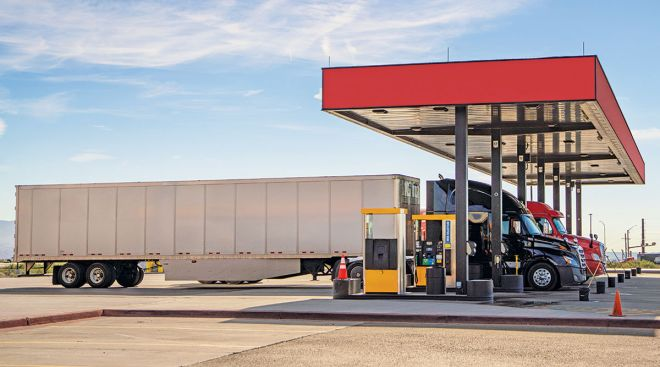
Fuel cost can represent 25–35% of gross revenue, depending on how the operation is managed and the current market conditions. Therefore, reducing the operating expenses through effective fuel management is one of the strongest tools in the path to profitability in trucking.
Fuel expenses must be evaluated per mile, not per gallon, to avoid distorted performance signals.
On the other hand, fuel savings plans are only effective if they are measured properly. Simply going for the cheapest fuel without considering additional costs for detours, idle time, or lost miles could backfire. The measure that really matters is cost per mile and not the price you pay for a gallon.
The manner in which fuel cost is dealt with in a disciplined approach includes:
- Weekly tracking fuel cost per mile
- Identifying fuel surcharge separately from profit
- Evaluating routes regarding total fuel consumed rather than distance
Improvements in the fuel-efficient trucks increase profitability for the trucking company only, if they are along with the discipline of rate and clear visibility of cost.
Repairs and Maintenance: Predictable, Even When They Feel Random
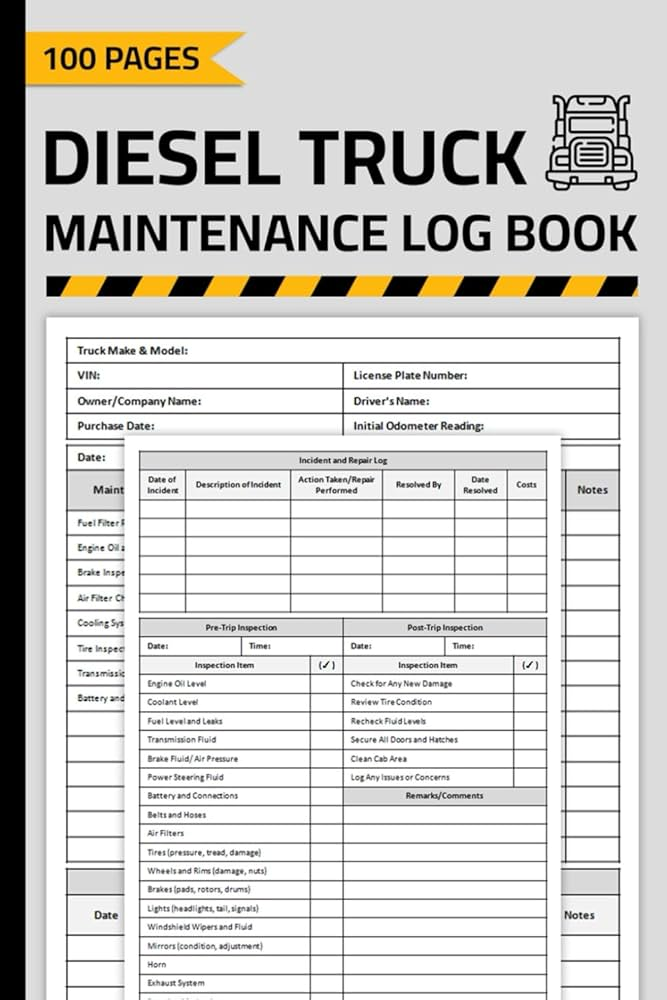
Truck repairs may often seem capricious, but they are, in fact, unavoidable. The main error is regarding them as unexpected issues instead of billing them as planned expenses.
Repair costs include:
- Preventive maintenance
- Wear items (tires, brakes, filters)
- Major failures (engine, transmission, emissions systems)
Consistent truck maintenance transforms mechanical risk into a manageable operating variable.
Wrong attitudes about repairs. Maintaining a truck is not an option; it is a deferred cost that accrues interest. For instance, if you skip a maintenance check you will have lower short term expenses but in the long run, you will end up with having more repair costs and downtime that will hit the owner-operator’s income twice.
The actual owner-operator P&L recognizes the need to budget for repairs on a per-mile basis, and that per-mile amount even though there may be months with no repairs done. That money is what will save a single problem from eliminating weeks of profit.
Independent truckers who go bankrupt financially very rarely because of one single repair— they fail because they fail to budget money for repairs all the time.
Taxes: The Expense That Is Never “Later”
Owner-operator taxes are one of the things misunderstandings about them often get most underrated. Unlike drivers of the company, owner-operators are obliged to pay the whole tax liabilities associated with their own trucking company.
This is inclusive of:
- Self-employment tax
- Federal income tax
- State taxes
- Quarterly estimated payments
Taxes do not only represent a leftover expense. They have to be projected in the P&L statement and need to be paid upfront rather than from whatever is left at the year’s end.
The most dangerous misapprehension in trucking finance is thinking that deductions can get away without taxes fully. Deductions decrease taxable income, but whether you are making profit or not you still have tax liability. The treatment of the taxes by the owner-operators as a secondary thought leads to their funding with debt most of the time.
A disciplined owner-operator reserves money for taxes on a weekly basis according to profit net — not revenues gross, and not quarterly.
Fixed vs Variable Expenses: Why Cash Flow Lies
One of the reasons that trucking companies seem difficult to understand is the mix of fixed and variable costs. Fixed costs are stable, while variable costs are scaling with activity.
Fixed expenses would include the following:
- Truck payment
- Insurance
- Permits and compliance
- Accounting and subscriptions
Owner-operator expenses rarely decline with higher mileage unless margins are protected.
The fixed ones that are uncertain during a profusion of miles actually shallow you during a shortage making them the dominant part in the P&L account. Hence, the illusion is created that the more you work the quicker you solve your financial problems. But the truth is the running of more miles at lower margins, which in its turn, speeds up wear and increases risk.
Trucking profitability improves only when variability is reduced, not when workload increases.
The good owner-operator is the one who keeps the balance of miles, margin, and equipment preservation.
The Real Owner-Operator Salary Question
Owner-operator salary is not the income that the business generates; rather it is what the business can give the owner as the first thing after covering its own expenses. The idea is very hard for the drivers who are moving into the world of ownership.
The truth is that a lot of owner-operators give themselves salaries that are not regular create a situation where the amount the owner withdraws is seen as income which is in fact not true. A professional way of doing it is through putting the owner’s pay on the line item in the P&L, and not as an afterthought.
A sustainable owner-operator salary:
- Is consistent, even in slow weeks
- Does not consume maintenance or tax reserves
- Reflects net profit, not gross revenue
When salary does depend on “what’s left,” the business does live with a lack of financial boundaries.
Trucking Profit Margin: Thin, But Controllable
Trucking profit margin for owner-operators is never too wide. You will find it common with well-run operations that the net margins are from 8 to 15 percent. That margin is the one that is expected to cover growth, replacement, and risk.
A healthy trucking profit margin is built on control, not volume.
The real secret of the trucking industry is not making as much as money it is reducing the variance. Each agent that a business cannot control increases the financial pressure and decreases the quality of the decision-making.
Successful independent truckers have a central focus on:
- Discipline on cost per mile
- Defined rate ceilings
- Scheduled downtime
- Equipment lifecycle management
Profit is a product of time, it is created slowly and it is very easy to lose it.
The Final Reality: P&L Is the Job
The owner-operator faces of the work of driving being just a small part. Reading, interpreting, and obeying the profit and loss statement is their main job. The truck carries the goods; the P&L decides whether there is a chance for long-term survival.
There are no shortcuts in owner-operator trucking. Income without structure creates illusions. Structure without discipline collapses under pressure. A clear, honest P&L turns uncertainty into control.
In the end, the success in the trucking business is not about the number of miles traveled, rates, or even equipment. It is in fact knowing for sure where each dollar comes from and where it goes.