Tools for finding cheap fuel and optimizing routes
For truck drivers, the fuel price is not a typical line of expenditure; its, in fact, the one and only variable that dictates their daily profitability. Even a tiny variance in fuel prices or the selection of the route can unobtrusively convert a profitable trip into one with marginal profit. Thus, modern trucking has ceased to be solely about driving abilities; it is also about information, timing, and the making of decisions before the wheels start to turn.
Cheap fuel and optimized routes are practically never established by chance but are the outcomes of a combination of the right tools and of thorough planning.
Cheap fuel in trucking is not a single low price at the pump, but the result of coordinated route and fuel decisions.
At the current time, with prices fluctuating, a shortage of gas, increased traffic, and pressure on time, drivers who mostly depend on instinct act as if they are in a losing battle.
This article includes a description of how the functions of two main tools that are fuel-finding and route optimization during their integrated operation are together able to yield results such as the reduction in fuel expenses, the promotion of fuel efficiency, and sometimes also the saving of a company’s finances in real truck operations.
The Indispensable Connection Between Fuel Prices and Routes
Most drivers are preoccupied with trying to find the cheapest gas available at the supply station while they totally overlook the matter of their route to get there. Others plan the most intelligent routes but end up filling their tanks at any convenient location. Both methods lose money after all.
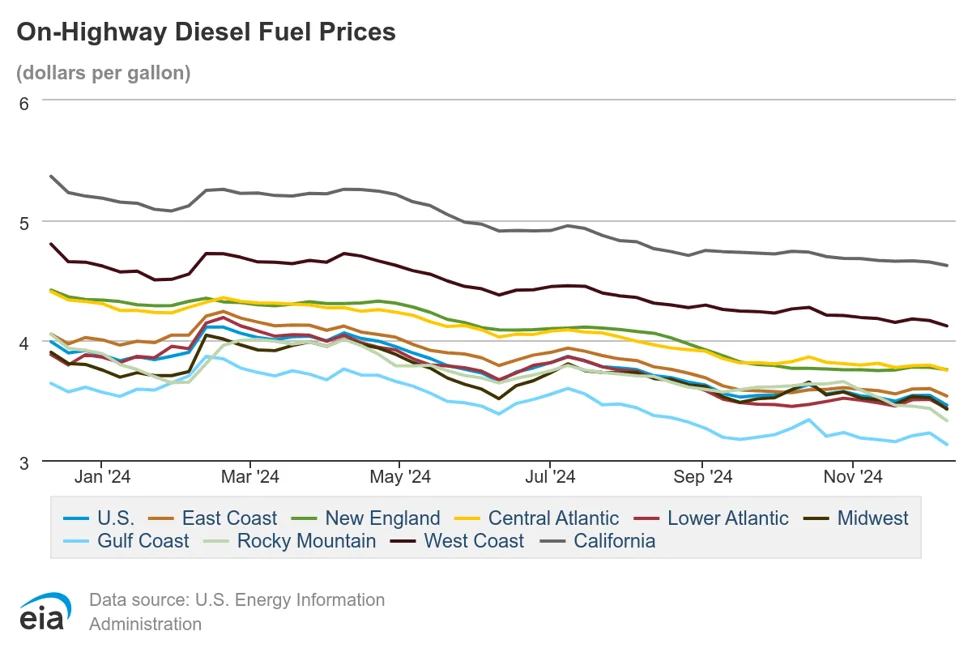
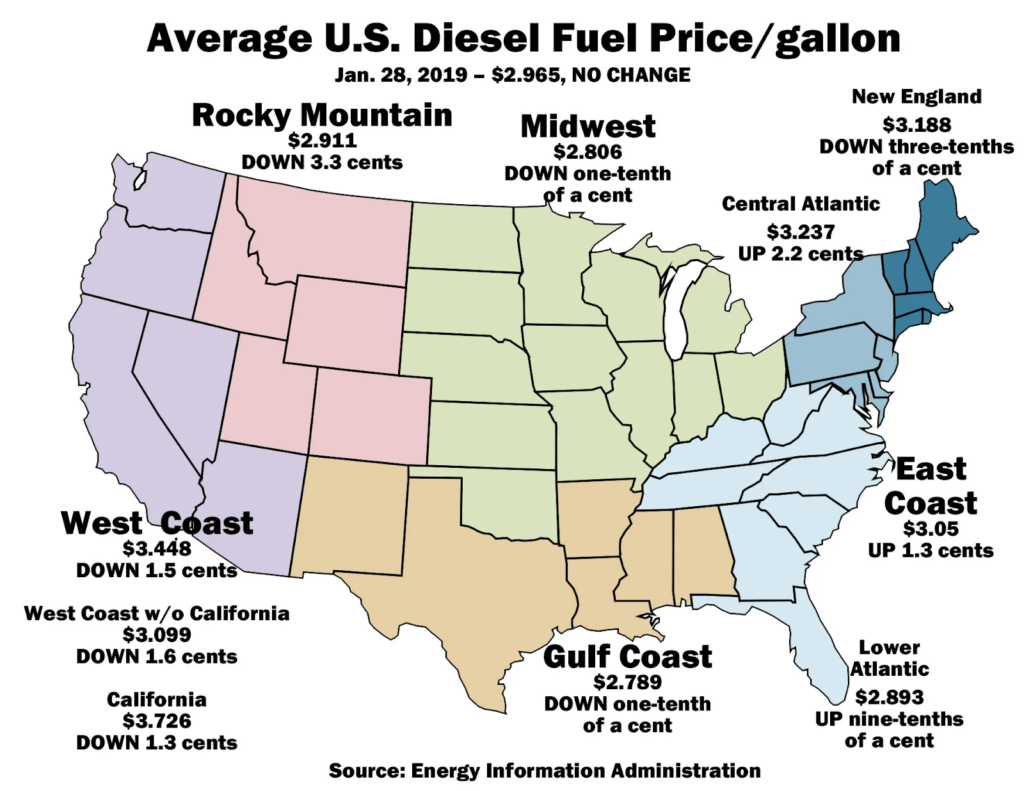
The fuel prices are not the same across the states or cities, but can also be different at the same exit, time of the day, and even depending on traffic patterns.
Gas prices fluctuate not only by region but also by timing, traffic density, and local demand.
Furthermore, the shortest path is not necessarily the most economical one. A congested road, a higher altitude, driving with a “stop and go” method, and detours all reduce engine performance.
As for the trucking industry, the main objective is not simply to get cheap gas but to do it on the most economical route. This very mixture of the two is what transforms the route planning process into a financial task instead of a mere navigation job.
How Route Choice Impacts Fuel Cost
| Route Factor | Effect on Fuel Burn | Hidden Cost Impact |
| Congestion | Higher | Idle fuel loss |
| Elevation changes | Higher | Increased engine load |
| Detours | Higher | Extra distance + time |
| Smooth highway flow | Lower | Stable consumption |
Gas Finder Tools: The Way Drivers Locate Inexpensive Fuel
A gas finder is far more than a mere price list. To the drivers, it comprises a system of real-time decision-making that links fuel cost with the respective area and time.
The gadgets that drivers can use to find fuel allow them to:
• Compare fuel prices across multiple stations
• Identify the cheapest gas along travel routes
• Filter stations by truck access and amenities
• Factor in distance from the highway, not just price
These tools help drivers find cheap gas without sacrificing route efficiency or adding hidden detour costs.
So, if a station shows a rate that is five cents cheaper than the one that has to be traveled all the way around, the extra cost for the route would outweigh any savings on gas.
A gas finder tool is basically an outlay of fuel prices stemming from the context that sees drivers making the right decision based on real savings on gas as opposed to theoretical ones.
Real gas savings appear only when fuel price advantages exceed the cost of time, distance, and congestion.
Posted Fuel Price vs Real Fuel Cost
| Scenario | Pump Price | Detour Cost | Net Result |
| Cheap fuel, long detour | Low | High | Loss |
| Average fuel, direct route | Medium | Low | Neutral |
| Discount fuel on-route | Lower | Minimal | Real savings |
Route Optimization: Beyond the Shortest Path
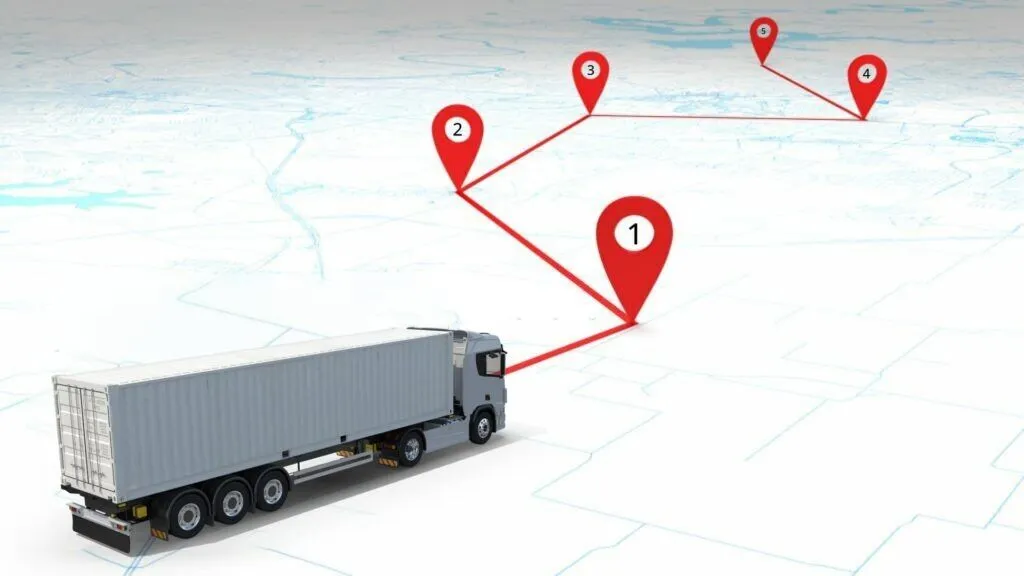
Route optimization in trucking is about minimizing cost, not distance.
To optimize routes in trucking means minimizing total operating cost rather than minimizing distance alone.
A route planner that only focuses on mileage ignores several critical factors that directly affect fuel cost:
- Traffic patterns and peak congestion
- Road grade and elevation
- Construction zones and seasonal slowdowns
- Urban stop density versus highway cruising
Optimized routes are based on smooth and predictable driving, which is essential for the economy of fuel. A slightly longer route that allows straight driving and avoiding fuel-wasting situations might be cheaper.
Modern route mapping tools with a combination of current traffic data and historical information assist truckers to select best routes that conserve fuel consistently not occasionally.
Shortest Route vs Optimized Route
| Metric | Shortest Route | Optimized Route |
| Distance | Lower | Slightly higher |
| Fuel efficiency | Lower | Higher |
| Idle time | Higher | Lower |
| Total fuel cost | Higher | Lower |
Fuel Cost Gets Reduced by Route Planning
The reduction of fuel cost hardly ever comes from huge, singular decisions. Rather, it is the accumulation of many correct decisions made time and time again.
TRIP PLANNING | Routing & Fuel Stops
When route optimization is effective, drivers experience:
- Fewer idle-heavy segments
- Reduced stop-and-go driving
- Lower average fuel burn per mile
- More predictable arrival times
Well-planned driving routes reduce unnecessary stops, idle time, and fuel waste across the entire trip. The result is in not only the lower amount of gas mistakenly burnt but also in the better control over travel routes, and thus on the overall trip economics. This is the reason why auto-centric navigation tools can’t help truckers that much – they simply overlook the operational reality of heavy vehicles.
Discount Fuel Programs and Their Significance
The discount fuel program becomes an additional layer of savings on fuel when it is used properly. The program is a one-stop access to the negotiated prices quite often lower than the posted ones especially at the truck stops which are highly frequented.
Nevertheless, the program of discount fuel is only useful if
- the station naturally integrates into the driving route
- the difference in price is greater than any detour
- the stop does not add idle or wait time
When a route planner is combined with discount fuel, it stops being a mere random benefit, but a strategic asset. Drivers who execute discount fuel within the framework of route optimization have systematically better results than those who only utilize discounts in an opportunistic manner.
Discount Fuel — When It Works
| Condition | Result |
| On-route station | Savings preserved |
| Minor detour | Marginal benefit |
| Long wait / congestion | Savings erased |
Truck Driving Navigation Tools Distinctive Features
Truck-driving navigation tools are distinctly different from consumer-grade applications in terms of certain critical features. They are specifically designed to address:
- Size and weight limits for vehicles
- Routing with hazmat if necessary
- Bridge clearances and road restrictions
- Commercial speed profiles
These utilities make it count not only in a legal way with truckers selecting the best routes, but in an economic way as well. A truck wrong turn is not only an inconvenience; it addresses the cost problem as well.
The best navigation tools integrate route optimization with fuel planning, allowing drivers to adjust routes dynamically when fuel prices, traffic, or conditions change.
Fuel Efficiency Begins Even Before the Trip Starts
Fuel efficiency is often discussed as a driving behavior issue, but planning has a greater impact than pedal control alone.
Drivers save on gas primarily through planning decisions made before departure, not just driving behavior.

A truck-focused road trip planner allows fuel stops and routes to be aligned before the trip begins.
Effective road trip planning for trucks includes:
- Selecting routes with fewer elevation swings
- Timing departures to avoid peak congestion
- Planning fuel stops in advance
- Avoiding last-minute route changes
Drivers who use the program photovoltaic not because they drive slower, but because they drive smarter, thus saving gas. This is why travel routes and prices of fuel form the part of one system.
Common Errors That Result in Increasing Fuel Cost
Even seasoned drivers are believed to follow some predictable patterns:
- Pursuing the cheapest gas only without considering detours
- Using car navigation tools
- Not considering the traffic during peak time
- Using the gas pump as a vending machine, instead of being strategic
These errors add up the fuel price in a silent manner. For weeks and months, they create a noticeable margin erosion that is difficult to link back to any single decision.
5 Fuel Efficient Driving Techniques to Save Truck Fleets Money
The Actual Objective: Gas Savings You Can Count On
The highly successful drivers never set their sights to achieving the ultimate efficiency. Their goal, instead, is to have frequently reduced costs.
By bringing together:
- Reliable gas finder tools
- Truck-specific route optimization
- Discount fuel programs
- A disciplined travel planning
They can build a system that they can repeat in all situations and that can protect every kind of profitability without regard to the instability of fuel prices.
Cheap fuel is of course beneficial. However, a powerful tool like optimized routes can do wonders. To achieve both, they should work in parallel and create the base for efficiency in trucking in this new era.
Final Thought: It Is Not The Tools That Save Money, But The Decisions
Navigation tools, route planners, and gas finders are solely indicators of the quality of decisions made. The true advantage is in the tools being used at the beginning rather than on the road as a reaction.
In truck driving, gas saving is not about luck — it is about the preparation, the structure, and the selection of the best routes with the right fuel strategy already.