
How to Ask Recruiters the Right Questions About Money
A truck driver’s all-inclusive handbook for pay transparency, real earnings, and avoiding costly misunderstandings
Introduction: Inability to Decipher Money Talk Why Drivers Are So Lonely
Truck drivers hardly ever get it wrong as they tend to be overly assertive during money talks with recruitment agents; the fault generally lies in the way the drivers articulate their questions or their timing — which are both off the charts. Pay in trucking involves many layers: CPM, bonuses, detention, layover, accessorials, benefits, and hidden deductions all shape the final number. However, there are still many drivers who only hear a single number during interviews and make the assumption that it is the actual income amount.
Recruiters usually operate in terms of averages, best-case scenarios, and simplified numbers. Drivers, on the other hand, deal with weekly settlements, downtime, and mile variations, not to mention the unpaid ones. Q&A cannot fill this gap without precise recruiter questions but not forceful negotiations and.
It is this guide’s main goal which is, to say, help truck drivers ask the right questions about money clearly, early, and in a professional manner so that compensation expectations and reality match.
Trucking’s Uniqueness When It Comes to Asking About Salary
While most jobs are a standard salary, trucking pay is performance-based. Two virtually identical drivers at the same company can earn vastly different amounts simply because one is assigned to better lanes and has fewer down-days than the other.
That’s why a discussion on salary in trucking should deal with the structure of the deal, not just the numbers.
Key differences:
- Pay per mile, not per hour
- Income is calculated weekly based on available miles
- Bonuses may be conditional or inconsistent
- Benefits and deductions significantly affect take-home pay
The question “How much do you pay?” is rarely enough on its own.
Best Time to Ask Compensation Questions in the Interview Process
Timing is everything. Asking too soon will look unprepared while asking too slow will chain you in a bad job offer.
In trucking, asking about salary during the initial screening is not premature — it is the only moment when expectations can still be aligned without pressure or leverage loss.
The optimal stages for asking money questions are:
- Initial screening call: ask for salary range and pay structure clarification
- Detailed recruiter conversation: break down compensation package
- Job offer stage: confirm everything in writing
Avoid waiting until your orientation is on to discuss money matters. At that time, you will be powerless to negotiate.
Core Salary Questions Every Truck Driver Should Ask
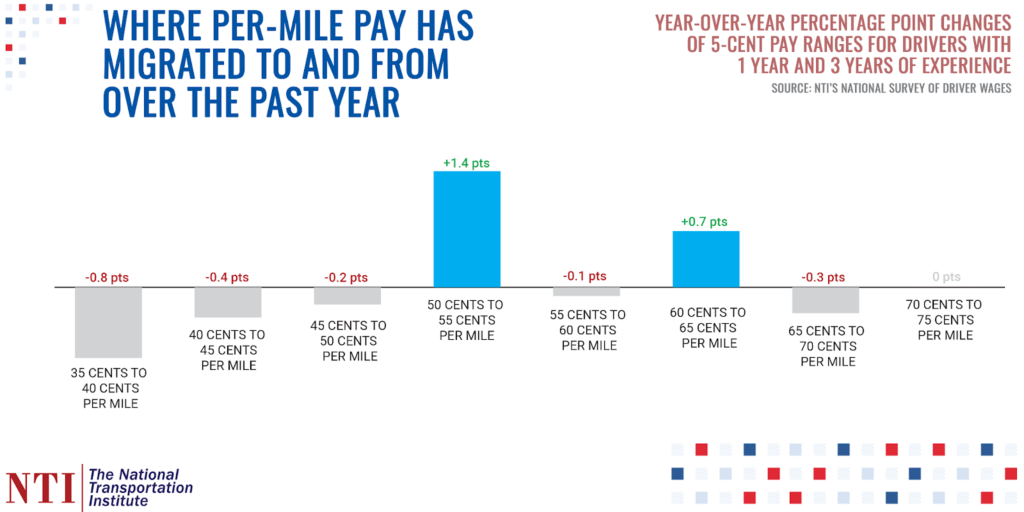
Well-prepared compensation questions belong among the most important interview questions, because they define how earnings are actually formed, not how they are advertised.
These questions are the starting point for pay transparency.
About Base Pay
- What is the base CPM? Is it guaranteed?
- Are the CPMs for loaded vs empty miles different?
- Which empty miles are compensated at the same mile rate?
- How frequently does the CPM grow, if at all?
About Mileage
- What is the average per driver weekly mileage, and not the one for trucks?
- How many drivers reach that average all the time?
- Which issues cut mileage the most at this company?
Compensating Beyond CPM: What Drivers Usually Miss
Drivers frequently focus only on CPM and ignore the rest of the rewards are— which are precisely where money is often lost.
Ask Specifically About:
- Detention pay (for how many hours, at what rate)
- Layover pay (when it applies)
- Extra stop pay
- Breakdown pay
- Safety or performance bonuses
- Referral bonuses (conditions and payout timing)
Common Recruiter Answers vs What They Really Mean
| Recruiter Phrase | What to Clarify |
| “Up to 70 CPM” | What is the guaranteed CPM? |
| “Average 3,000 miles” | How many drivers actually hit this weekly? |
| “Great bonuses” | How often are they paid and missed? |
| “Detention available” | After how many hours and how much? |
| “No forced dispatch” | How refusals affect miles? |
The quality of recruiter communication often becomes clear not from the answers themselves, but from how openly a recruiter reacts when a driver keeps asking recruiter follow-up questions about money.
Asking About Total Compensation, Not Just Pay
The intelligent drivers want to know about total compensation, and not just weekly base.
Key questions:
- What does health insurance cost per paycheck?
- Is there a 401(k), and does the company match?
- Are there escrow accounts or mandatory deductions?
- How much does orientation pay, and when is it paid?
Total Compensation Checklist
- Gross pay
- Deductions
- Benefits cost
- Paid vs unpaid time
- Bonus reliability
Salary Negotiation Tips for Truck Drivers

Negotiation is not about disputation; rather, it is all about positioning in the trucking industry.
The most effective negotiation tips in trucking focus on improving earning conditions rather than arguing over headline pay numbers.
Effective techniques for negotiation:
- Cite experience, not personal costs
- Request better lanes instead of a higher rate per mile
- Negotiate detained terms where the CPM is fixed
- Seek written confirmation of pay details
- Use neutral language. Talk only about facts, figures, and structure.
How to Inquire about Current Salary Expectations (Without Hurting Yourself)
If you are asked about your current salary:
- State the range, not the exact numbers
- Concentrate on achieving a weekly salary rather than the best weeks
- Redirect to expectations based on the new job
Example:
“I’m focused on consistent weekly earnings in the $X–$Y range based on miles and accessorial pay.”
Red Flags in Recruiter Communication About Money
Things to beware of:
- Refusal to give written pay details
- Frequent reference to top earners
- Unclear answers about miles
- Urging to avoid queries and just give it a try
Silence or avoidance of money is itself an answer.
Good vs Bad Recruiter Communication
| Good Signs | Warning Signs |
| Clear salary range | Only “up to” numbers |
| Written breakdown | Verbal promises only |
| Explains deductions | Avoids benefit costs |
| Realistic mileage | Unrealistic averages |
How do you ask salary questions in a way that still makes the interview easy?
Some drivers feel uneasy about asking salary because they think it sounds pushy or too focused on money. The actual problem is not whether or not to negotiate salary, but how to do it. Well-thought-out salary questions are a sign of business professionalism and preparation rather than of a desperate person. These discussions are part of the process, which employers expect, especially in trucking where wages can differ greatly.
The best way is to propose questions related to compensation through the avenue of assuming the role more fully, rather than questioning the offer. Money should be treated as one (among such things as routes, equipment, home time, dispatch style) when discussing it in the interview process. Pointing this out will keep the discussion even and fruitful.
For instance, instead of just plainly referring to “What is the pay you offer?” a driver may say:
“Could you tell me about the operation of the pay system, so that I can understand how the weekly earnings are calculated?”
This sets the way for greater communication between the driver and recruiter and without hesitation makes room for explaining the CPM, bonuses, and deductions. The knowledge of how to ask is equally significant as the issue, for which one asks.
Smart questions about the money topic are those that are precise, objective and related to the act of doing not feelings. They are vital when it comes to aligning expectations at the very beginning of the process, before any unrealistic ideas are formed. Drivers that omit this part, deal with the real economic consequences later, when they are paid for the time worked.For truck drivers, these job seeker tips help turn recruiter conversations into clear, structured decisions rather than emotional choices based on a single pay number.
In trucking, talking about money in the very beginning is not a red signal — it is a green one.
In practice, talking salary early creates clarity, while silence almost always creates disappointment later.
Salary Negotiation in Trucking: What Actually Works
The subject of salary negotiation in trucking is often highly misrepresented. Different from office jobs, during negotiations pushing of CPM isn’t that common. The really effective negotiation strategies will rather on how to increase the factors that constitute the weekly income.
Veteran drivers are knowledgeable that what matters is lane quality, consistency of miles, detention handling, and accessorial pay rather than a single CPM point. Driving questions the recruiter hears at those moments should be about what happens in operations, not personal needs.
Examples of good negotiation stances include:
- Request for more reliable lanes
- Exact accountability of guaranteed minimum miles
- Changes in the terms of detention or layover
- Notice of written bonuses
In this form of salary negotiation, both parties work together and not face each other. When drivers show that they grasp the business model, recruiters respond positively much more often. The talk turns from “pay me more” to “help me earn consistently.”
Also, drivers should steer away from the path of late negotiation. As the orientation is scheduled, the advantages drop sharply. The best time for negotiation is immediately after both sides reach the understanding but before the job offer is finalized.
In a few words, it can be said that the proper way in negotiating trucking deals is to focus mostly on the structure than rates.
The Benefits Package, Expectations, and Long-Term Fit
Most drivers put all their attention on what they will earn weekly and neglect the benefits package, although it has a direct influence on net income and job satisfaction. Unexpected health insurance costs, retirement options, and unpaid time off can elevate what looks like a strong offer on paper to a red flag.
When contacting a recruiter, drivers should use clear and calm communication when inquiring about the benefits and deductions. This job seeker communication advice is even more essential when drivers are comparing offers with the same CPM but different long-term value.
Besides doing the above, it is also crucial to make sure the salary expectations are aligned with reality. Drivers shall outline the expected salary as ranges that depend on the consistency of freight rather than peak weeks. This signals the maturity of the driver and makes it easier for the recruiters to find the right type of freight.
For example:
“My target is to earn weekly $X–$Y through stable miles and accessorial pay, particularly at consistent deliveries.”
This way of discussing money is reasonable and intelligent. In addition, it reduces the risk of getting mismatching expectations that arise to turnover.
In the end, the best conversations about money are not those of winning or losing but of being open. Drivers who ask the right questions at the right time make their careers smoother and with better payments.
Final Thoughts: Asking the Right Questions Protects Your Income

Truck drivers do not lose money for asking those not-generally-known questions about salary; they lose money because they neglect to ask more questions ever. Recruitment inquiries are not a confrontation, they are due diligence.
Asking questions like the right salary, the right compensation, and the right benefits protect you from the wrong expectations, the wrong time unpaid time, and long-term dissatisfaction. In trucking, transparency is not automatic. It is necessary to request it.
A professional recruiter, with whom you are dealing, will build up the trust if you directly raise the issue of money. If the case is different, the answers you do not get will possibly help you to avoid a costly job offer.
In trucking, your paycheck is planned ahead of time and given before the wheels are even spinning.