Driver’s Personal Budget Templates for the Initial 6 Months
A trucking career is not only a change in work but also a change in a person’s daily routine and way of life, indeed. Think of it this way: a new driver might be able to show a good income, yet the first six months might be financially shaky due to irregular pay cycles, unexpected costs, and the lack of comprehending where money actually goes. And that is exactly the reason that a planned driver budget cannot be just a choice, it has to be the only one, the basis for financial survival during the connection period.
A personal truck driver budget differs from a household budget based on a fixed monthly paycheck in several ways. In trucking, the income is irregular, the expenses are split between living at home and driving on the road, and many costs appear only after you start driving consistently. Without a proper budget plan, truckers often approve excess income and miss out the extra share on variable expenses that quickly take their toll.
The purpose of a budget for 6 months is not to cut spending like crazy but to achieve visibility and control. These initial months are the time to form habits, where mistakes are most costly, and financial stress can go underground and affect your driving performance. A proper personal finance framework gives the drivers a chance to be proactive in finance management instead of being reactive in shortages.A 6 month budget creates a clear runway where income timing and essential expenses stop feeling random.
Why the First 6 Months Require a Separate Budget Strategy
The early stage of a trucking career is different from long-term financial planning. Paychecks may not stick to the same calendar week, miles may be inconsistent, and the broker may not yet have finished assigning you to the bonus structure. Nevertheless, at budget time, driver expenses will spike due to the cost of living on the road, onboarding costs, and delayed reimbursements.
During this time, driver budgets need to be directed toward cash flow rather than totals. Budgeting for drivers works best when it tracks cash flow weekly, not just totals on paper. It’s not enough to simply know what’s coming into your pocket every month – you have to know the key timelines for both money coming in – and going out. Integrations such as fuel advances, per diem structures, maintenance deductions, and personal spending allowances are all new to rookie drivers.
A six-month truck driver budget built in such a way creates an environment where fixed expenses are prioritised first, variable expenses are monitored closely, and savings come in incrementally. Thus, this method is better for drivers as it keeps them away from early burnout instead of being overloaded with financial worries about the will and workload.
The Basic Structure of a 6-Month Driver Budget Template
Every effective budget sheet of a driver starts with splitting the costs by behavior, not only by category. The most effective way is to first and foremost divide the money into fixed expenses, variable expenses, and road add-ons, treating savings as a liability rather than money available later. According to financial guides for truck drivers, tracking income and expenses and categorising them into fixed and variable costs is foundational to creating a realistic budget. prodriver.com
Fixed Expenses
Fixed expenses are resolved regardless of driven miles or chosen routes. This category includes rent/mortgage, utility costs, internet/phone bills, car loans, and any basic subscriptions. These costs must be allocated regardless of how the week of hauling goes, hence they are the crucial points of reference for the entire budget.
Variable Expenses
Variable expenses are both flexible and risky. Inexpensive food, personal items, entertainment, and discretionary spending regularly expand the available cash. In trucking these expenses, however, swing the mood due to tiredness, limited options, and shopping that is not related to a good mood. Therefore, it is vital to track them down as they might be a threat to financial management.
Road Expenses
Road expenses are items that only a truck driver will incur. They prove the point that it is necessary to have their own section in the budget. Meals, showers, parking, laundry, maintenance supplies, and unexpected car-related costs are all part of the story. Not even the company drivers usually remember to include all cash overspending in the non-receipt accountable items.
10 truck driver money saving tips
The Choice of Budget Templates for Company Drivers and Owner-Operators
While the personal budget scheme is still the same, the details change considerably based on the driver’s position. A new truck driver budget for company drivers primarily discusses the volatility of an income and personal spending discipline. Fuel costs and vehicle maintenance are usually indirect, yet are still the reasons/don’t take home pay, deductions, per diem, downtime, etc.
On the other hand, the owner-operator budget must blend both the business and the personal side with utmost caution. Gas, maintenance money, insurance, tolls, and repairs can turn into variable expenses that destroy your cash flow if not done right. Owner-operators have to run their operations and their living expense in formula fashion: a business operation budget along with personal living expenses; they require a dual budget system.
In both cases, the first stage of the plan should have a focus on stabilization over maximization. Strategic financial planning at this stage should focus on the three goals: your stability, the emergency buffer, and visibility. These go hand in hand rather than aggressive savings.
Utilizing Budget Templates as a Management Tool, Not a Disabling Tool
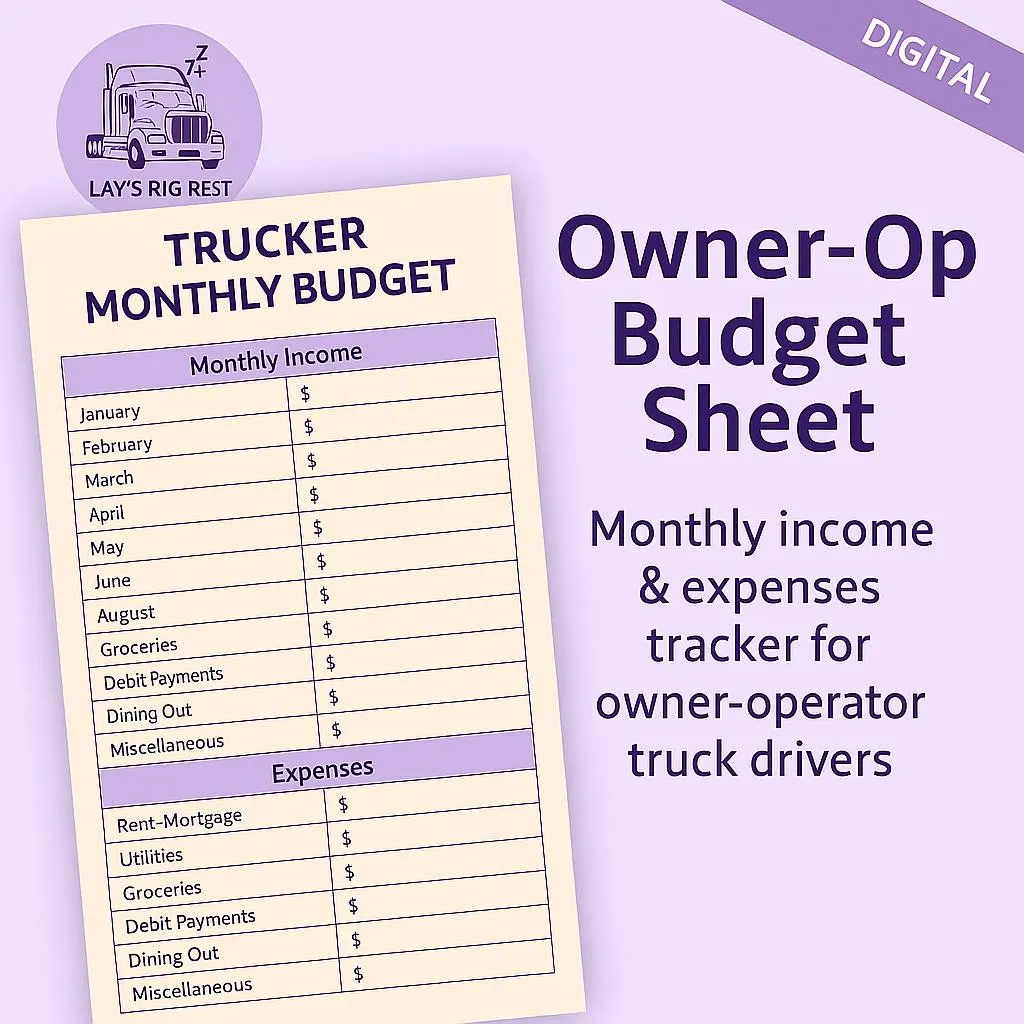
A lot of drivers consider budgeting a constraint. Nevertheless, in trucking terms, budgeting is really more about the protection of the goods. A well-crafted expense sheet doesn’t dictate your cash-outflow but states what you can afford to spend worry-free.This is the moment most rookies learn to manage finances without cutting everything that makes the road sustainable.
Prototypes are for weekly reviews rather than for a monthly one. The trucking business is fast-paced, and monthly neglect causes trouble to accumulate before they become repairable. The simple weekly updated template clearly allows the drivers to figure out the early patterns and work out their behavior before the financial management turns from proactive to damage control.
Erasing personal spending on the road does not mean a driver shutdown. It means getting a realistic spending limit that reflects the life of a pro driver. Nominal, but consistent savings during the initial stage will boost the financial management confidence and decrease anxiety which are two factors that directly influence both safety and performance.
Financial Discipline a New Professional Skill
In commercial transportation, finance management is not a separate job but is part and parcel of the whole job. Drivers who learn how to budget well in the beginning are more likely to make better career choices, get into less debt, and be more able to persevere through slow transportation periods.
The first 6 months create long-lasting habits. A drivers’ schedule that includes the expense tracking, allocation of Fixed expenses, and a rainy day fund for variable spending will support the future income growth, whether it’s transitioning to more lucrative routes, owner-operator or specialty freight. Strong financial planning continues to give a competitive edge.
A personal budget is not about control over money; it is about control over uncertainty. And in trucking, uncertainty is one of the most expensive burdens a driver can carry.
Practical Systems for 6-Month Budgeting
A 6-month budget is realized fully only by its shift from theory to everyday usage. Many drivers, despite starting off with a budget template, usually abandon it when the road routine gets cumbersome. Budgets that work are in constant use and show real-life data and thus, they differ from abandoned spreadsheets.
Drivers in the trucking industry have to think about movement, downtime, and uncertainty while planning their budgets. A well-constructed template is not dependent on monthly summaries but on the weekly cash flow reviews it contains. This gives the drivers a chance to control their expenses dynamically, adjusting their lives beforehand before crisis situations arise. Thus the target is not excellent precision but being the first to know.
An expense tracker is the spine of the entire system. Whether it is a digital or on-paper platform, it should cover the various categories that affect the take-home pay: fuel costs not covered, personal road expenses, maintenance-related out-of-expense purchases, and discretionary spending. The money patterns people exhibit across other areas of life come to the forefront due to tracking which also prevents overspending money.
Money Control on the Road without Stressing Out
New drivers tend to violate budget discipline on the road expenses, and mainly this part of finance is challenging for most of them. These expenses seem insignificant when viewed in detail but become a volatile factor as time passes and can eat away savings quietly. Meals, showers, parking, convenience-store stops, and emergency purchases are other items that stacked together result in a higher total especially in long-haul weeks.Saving on the road becomes easier when small daily choices are capped by a weekly allowance instead of impulse.
Saving money on the road is not about eliminating comfort. It requires boundaries. Making an explicit weekly allowance for spending on roads gives the drivers free will to spend without guilt while it covers the bigger budget. By doing so, it allows to shift the waning of impulse to a stronger structure.
Truck repairs and routine checkups also simmer quietly in the personal budget as well. Even company drivers experience little incidences where a certain amount of maintenance is not reimbursed immediately. However, this troublesome scenario is much more dangerous for the owner-operators due to the repair costs and fuel which directly chop off the net profit. Thinking ahead and preparing for these operating expenses will help avoid the jarring and sudden financial strain.
Frequently Tracked Road Expense Categories
- Meals at roadside restaurants and beverages while on duty
- Showers, parking, and laundry
- Personal supplies and small tools
- Unplanned truck maintenance items
Budget Templates as a Tool for Financial Confidence
The success of the budget template relies not on strict limitations, but on security. Drivers who know how to manage their money are not only more relaxed on the road but also at home. This self-assurance reduces the stress level, enhances focus, thus indirectly offering better driving discipline.
In trucking, money management is not so much a matter of how much you earn but rather how disciplined you are in controlling your outflow. During the first half-year is when the good habits get carved in. Drivers that take the lead in adhering to the structured budgeting process very rarely face difficulties afterward, be it due to the increase in income or the addition of responsibilities.
Budgeting also hearts drivers in that it helps them distinguish between emotional and mandatory spending. Stress, loneliness, and time shortage are the main causes of impulse buying. A visible budget makes it easier to recognize those moments and correct them without guilt.
Weekly Budget Review Focus Points
- Income received vs expected
- Road expenses compared to allowance
- Fixed expenses coverage status
- Savings contribution progress
Sample 6-Month Driver Budget Overview
Monthly Budget Structure
| Budget Category | Monthly Allocation | Notes |
| Fixed expenses | Stable amount | Rent, phone, insurance |
| Variable expenses | Flexible range | Personal & discretionary |
| Road expenses | Weekly allowance | Food, parking, showers |
| Savings | Gradual increase | Emergency buffer |
| Maintenance reserve | Conditional | Owner-operators priority |
Tracking Expenses to Improve Financial Decisions
Expense tracking is not about micromanagement. It is about clarity. When drivers log expenses consistently, they stop guessing and start knowing. This shift alone improves financial planning dramatically.
An expense sheet should be simple enough to maintain during busy weeks. Overcomplicated systems fail quickly. The best expense tracker captures what matters and ignores the rest.
What an Effective Expense Tracker Should Include
- Date and category
- Amount spent
- Road vs home expense
- Reimbursable or non-reimbursable
Fuel Costs and Maintenance Planning in Early Career Stages
Fuel costs are often underestimated in early budgeting, especially for owner-operators. Even when fuel is reimbursed or advanced, timing matters. Delays between spending and reimbursement can create cash flow pressure if not planned.
Truck maintenance planning during the first six months should focus on prevention rather than reaction. Setting aside even a small buffer reduces the financial impact of unexpected repairs and keeps the budget stable.
Variable Cost Risk Comparison
| Expense Type | Predictability | Budget Impact |
| Fuel costs | Medium | High |
| Maintenance | Low | High |
| Road expenses | Medium | Medium |
| Personal spending | Variable | Medium |
Budgeting as a Long-Term Career Advantage
Drivers who master budgeting early gain a long-term advantage. Whether transitioning to higher-paying routes, lease programs, or owner-operator roles, strong financial habits scale with income.
A driver budget is not just about numbers. It is about reducing uncertainty, maintaining stability, and protecting mental focus. In trucking, those who manage money well often last longer, earn more steadily, and experience less burnout.
If you’re building a stable budget for the first 3–6 months, payment speed matters more than most rookies expect. Here’s a practical breakdown of quick pay options for truckers and when they actually make sense.
A personal budget does not limit freedom — it preserves it.